The choice of a dental clinic abroad is not based on Google reviews or the pricing promises displayed on the homepage. The reliability of a facility is verified in advance, through specific technical criteria that most consumer guides do not mention.
Teledentistry and pre-treatment diagnosis: the technical filter before departure
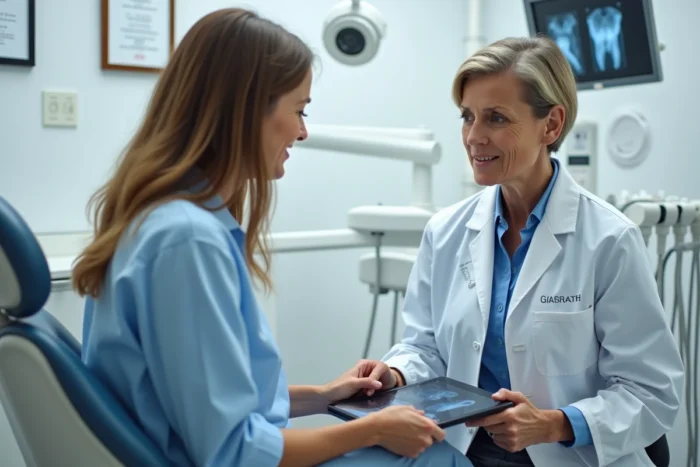
A reliable dental clinic systematically offers a pre-treatment video consultation with the practitioner who will perform the care, not with a salesperson or coordinator. This point distinguishes serious facilities from volume factories.
During this consultation, we recommend demanding a detailed reading of your dental panoramic (or CBCT if implants are involved). The practitioner should formulate a provisional treatment plan, identify any potential contraindications, and specify the materials considered. A clinic that agrees to place implants without prior 3D imaging represents a major warning signal.
The Global Dental Tourism Report by DentaVacation confirms that the growth of digital consultations and teledentistry has strengthened patient trust before departure. Specifically, this step allows for the verification of three decisive elements: the clinical competence of the practitioner, their ability to communicate in your language, and the consistency of the quote with the diagnosis.
To find a dental clinic abroad that meets these requirements, teleconsultation remains the most reliable way to sort through establishments before committing to a travel budget.

Clinical certifications and health standards: what the patient should verify
Not all certifications are equal. The ISO 9001 standard does not guarantee the quality of care, it certifies a management system. For a dental clinic, the relevant accreditations concern health compliance and traceability of medical devices.
Here are the points to check before validating a clinic:
- The traceability of implants: each implant placed must be accompanied by an implant passport mentioning the brand, lot, diameter, and length. Without this document, no follow-up is possible in France or Switzerland.
- The sterilization protocol: class B autoclaves, sterilization pouches with chemical indicators, documented cycle. Request a photo or description of the sterilization circuit.
- The brands of implants used: recognized systems (Straumann, Nobel Biocare, Osstem, Megagen) have international maintenance networks. An implant from an unknown brand drastically complicates follow-up by your local dentist.
- The practitioner’s registration with the professional order of the country of practice, verifiable online in most European countries.
We observe that clinics that spontaneously communicate this information on their website or upon first contact are generally those that have nothing to hide.
European legal framework: directive 2011/24/EU and reimbursement
The directive 2011/24/EU on cross-border healthcare regulates the rights of European patients receiving treatment in another member state. This text requires EU countries to reimburse care received abroad within the limits of the applicable rate in the patient’s country of origin.
In practice, for scheduled dental care, two reimbursement pathways coexist. Regulation 883/2004 allows obtaining prior authorization from the CPAM (form S2), which entitles direct coverage according to the rates of the country of care. The directive 2011/24/EU, on the other hand, does not require prior authorization for most dental procedures, but reimbursement is limited to the French base rate.
Checking the reimbursement framework before departure avoids unpleasant surprises upon return. The detailed invoice must mention each procedure with its coding, the materials used, and the identification of the practitioner. Without these elements, the CPAM or your mutual insurance may refuse reimbursement.
Case of non-EU countries
For clinics located in Turkey, Albania, or other non-European Union countries, neither the directive nor the regulation applies. Reimbursement then depends exclusively on your mutual insurance contract. Some complementary insurances cover care outside the EU, while others do not. We recommend requesting written confirmation from your organization before booking.

Post-operative follow-up and warranty on dental care abroad
The follow-up after placement is the weak link in dental tourism. A reliable clinic formalizes this follow-up in writing before the start of care.
The elements to demand in the care contract:
- A written warranty on implants and prostheses, with specific duration and conditions (generally five to ten years for implants, two to five years for ceramic crowns).
- A remote follow-up protocol: control radiographs to be transmitted, schedule of post-operative consultations, contact person reachable by phone or videoconference.
- An agreement for covering adjustments or corrections, including the issue of transportation costs if a return visit is necessary.
A complete implant passport allows your local dentist to ensure follow-up without depending on the originating clinic. It is the most protective document for the patient in the long term.
The search for a dental clinic abroad hinges on verifiable criteria: teleconsultation with the practitioner, traceability of materials, mastered legal framework, and written warranty. These four filters eliminate the vast majority of high-risk facilities, regardless of the chosen country.