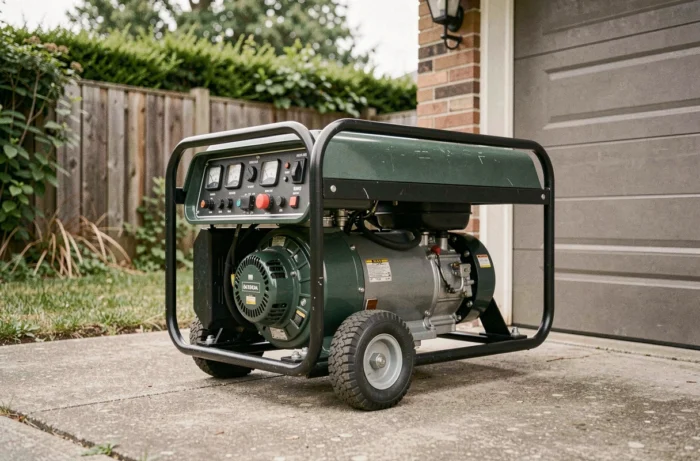
The SDMO Phoenix 3000 is one of those portable generators whose technical specifications seem ordinary at first glance: Kohler engine, brushless alternator, modest fuel tank. However, comparing its features to those of competing models in the same power range reveals significant differences in autonomy, noise level, and maintenance.
Kohler CH270 Engine of the SDMO Phoenix 3000: What the Technical Specs Imply
The SDMO Phoenix 3000 generator (and its successor, the Perform 3000 C5) is based on a Kohler CH270 engine of 208 cm³ air-cooled. This four-stroke single-cylinder block is designed for repeated use rather than just occasional emergency backup.
The Quad Clean filtration system, delivered as standard, deserves attention. This cyclonic filter offers four levels of filtration that expel coarse particles before capturing finer ones. The air intake remains clean longer, reducing the frequency of filter replacement and extending the engine’s lifespan in dusty environments.
A detail often overlooked: the integrated summer/winter selector on the carburetor facilitates cold starts. On a winter construction site or during a power outage in cool weather, this feature avoids repeated starting attempts that strain the starter and spark plug. For everything you need to know about the SDMO Phoenix 3000, the manufacturer’s data confirms that this Kohler engine is guaranteed for three years, parts and labor, under SDMO’s Qualigen charter.
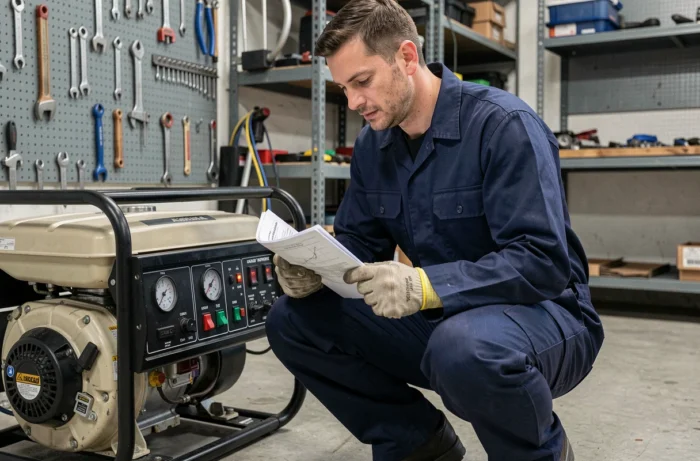
Comparison Table: Phoenix 3000 vs. Gas Generators of Similar Power
The data below comes from the manufacturer’s sheets of the Perform 3000 C5 (direct evolution of the Phoenix 3000) and competing models in the nearby power range.
| Criterion | SDMO Perform 3000 C5 | Generic Gas Generator 3 kVA |
|---|---|---|
| Engine | Kohler CH270, 208 cm³ | Variable (often non-professional engine) |
| Alternator | Brushless, IP23 | Often with brushes |
| Tank | 4.1 L | Generally 3.5 to 6 L |
| Autonomy (75% load) | 3.2 hours | Variable, rarely indicated at standardized load |
| Noise Level (LwA) | 96 dB(A) guaranteed | Often above 97 dB(A) |
| Sound Pressure (7 m) | About 67 dB(A) | Rarely communicated |
| Warranty | 3 years (Qualigen) | 1 to 2 years depending on the brand |
The 4.1 L tank may seem limited. However, the autonomy of 3.2 hours at 75% load places this generator in the high average for a portable model of this displacement. The gap is especially pronounced in the durability of the alternator: a brushless alternator eliminates wear on the brushes, a component that requires periodic replacement on brush models.
Noise Level and IP23 Protection: Two Underestimated Data Points
The guaranteed acoustic power level LwA of 96 dB(A) corresponds to the value measured according to the ISO standard, the one that appears on the regulatory label. The perceived sound pressure at 7 meters drops to about 67 dB(A), which is the volume of a sustained conversation.
On a construction site where several tools are operating simultaneously, this difference compared to a noisier generator is tangible. For residential use during a prolonged outage, this is a criterion that determines neighborhood tolerance.
The IP23 protection of the alternator means that the unit can withstand water projections inclined up to 60° from vertical. The compact chassis with shock-absorbing bumpers enhances this robustness, a point that explains why the Perform 3000 is referenced in professional rental fleets.
Maintenance and Key Points of Attention for the SDMO Generator
A portable gas generator does not require heavy maintenance, but a few operations condition its longevity:
- Check the oil level before each start. The Kohler CH270 engine has an automatic shut-off system triggered by a low level sensor, but a manual check is still preferable to avoid running at the limit
- Replace the Quad Clean air filter according to the manufacturer’s recommendations, shortening the interval if the unit operates in a dusty environment (construction site, outdoor carpentry)
- Use recent unleaded gasoline and do not store fuel in the tank for more than a few weeks, to avoid clogging the carburetor
- Regularly check the spark plug, especially if starting becomes difficult despite the winter position of the selector
The absence of brushes in the alternator eliminates a recurring maintenance task. On a classic model, the brushes must be inspected after several hundred hours of operation. The Perform 3000 C5 eliminates this constraint from the design.
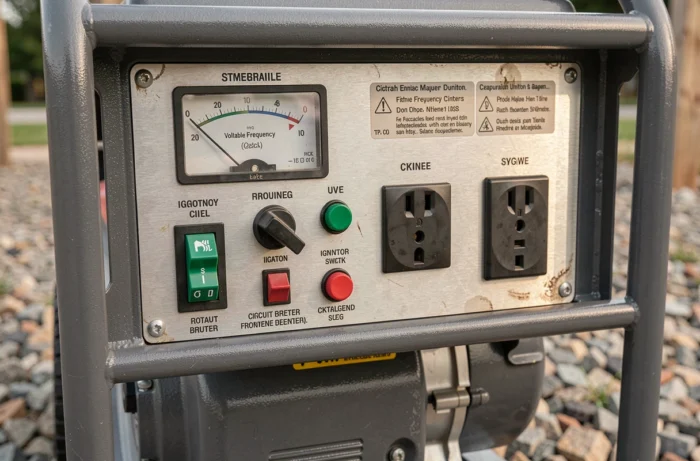
Construction Site Use or Domestic Backup: Where the SDMO Phoenix 3000 Positions Itself
Buying guides often classify this generator as a domestic model. The technical data tells a different story. The reinforced chassis, Quad Clean filtration, and brushless IP23 alternator correspond to specifications oriented towards professional rental and repeated construction site use.
For an individual, this means a significant margin of robustness. The unit will withstand frequent starts and harsher usage conditions than an entry-level model, even if the maximum power remains limited to the range of small equipment (lighting, lightweight tools, backup power).
The 4.1-liter tank requires planning for additional fuel for prolonged use. With 3.2 hours of autonomy at 75% load, a 10-liter can easily covers a day’s intermittent work. The consumption/power ratio remains competitive for a gasoline engine of this displacement.