Law No. 2026-602 of July 8, 2026, published in the Official Journal, makes France the first country to regulate ultra-fast fashion. Starting January 2027, advertising for these brands will be banned, including through influencers. This regulatory constraint reshapes what a successful look this season means: sustainable pieces, controlled cuts, and noble materials take precedence over the frantic renewal of micro-trends.
Textile penalty and end of hauls: what the law changes for your wardrobe
The text provides for a penalty of up to half the price of the product for ultra-fast fashion players. Second-hand items are explicitly excluded from the scheme, which mechanically directs consumers towards resale platforms and long-lasting pieces.
For the seasonal wardrobe, the consequence is direct. Trends dictated by two-week renewal cycles lose their main media relay: sponsored content on social networks. Brands that focus on tighter collections, with traceable fabrics and cuts designed to last several seasons, gain visibility.
We observe that French brands are already repositioning their ranges around reworked basics (structured cut jeans, short thick cotton jackets, mixed linen dresses) rather than on disposable, fast-rotation pieces. This regulatory shift validates a reflex that savvy shoppers were already applying: investing in fewer, better-cut pieces.
Structured cuts and controlled volumes: the silhouettes of the season
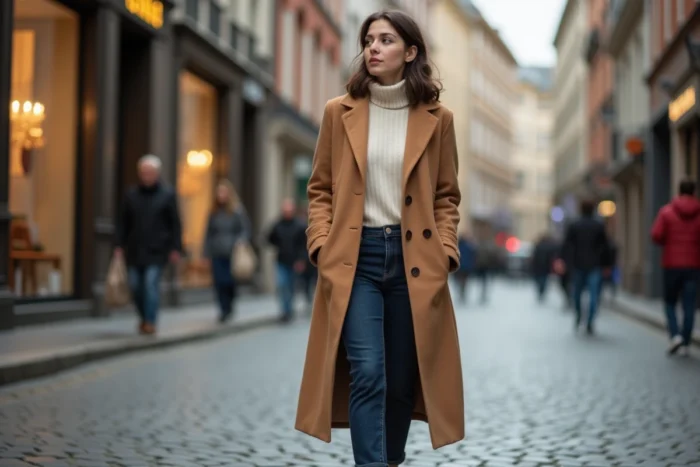
The barrel cut on jeans emerges as the key volume. Wide at the thigh, tapered at the ankle, it gradually replaces the wide-leg that has dominated for several seasons. On the CM 35 website, the selections reflect this shift towards cuts that sculpt without compressing.
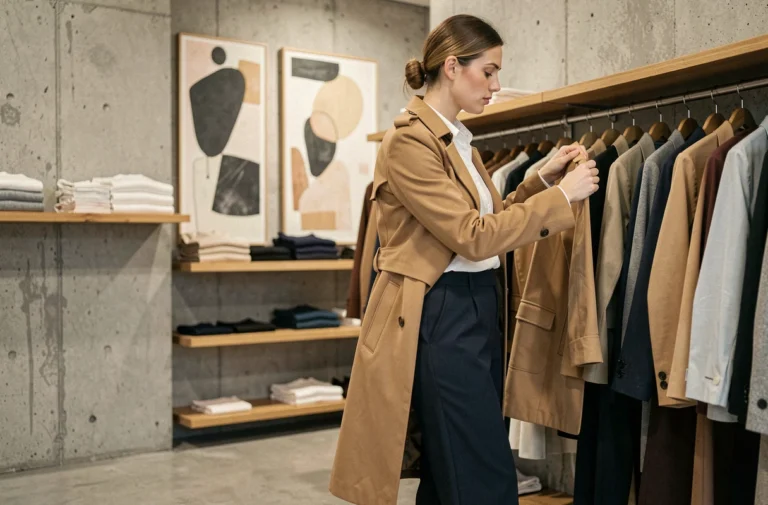
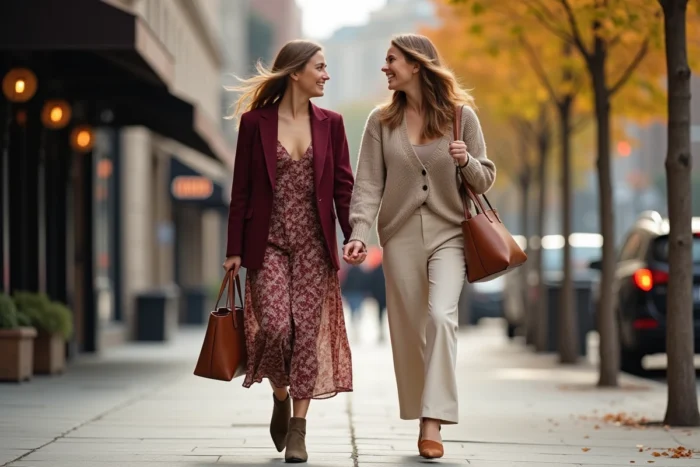
The beige thick canvas pants return in a bold workwear style. Worn with a colorful short jacket or a cropped trench, it anchors the silhouette in a functional wardrobe. We recommend prioritizing pleated versions, which hold their shape better after several washes than flat cuts.
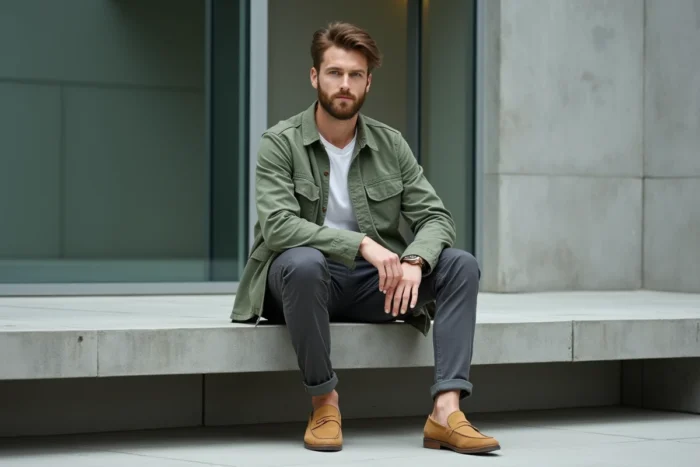
On the upper body side, the oversized knit sweater works in layers over an open-collared shirt. The idea is not to stack layers, but to play with lengths: a sweater that falls below the hip, a shirt that extends two centimeters. The length variation replaces the accumulation of accessories as the main style lever.
Color palette: butter yellow, sage green, and the return of matte red
Pastel shades (sky blue, powder pink, mint green) remain present, but the real novelty lies in butter yellow, a muted tone halfway between mustard and cream. It works particularly well on linen or brushed cotton pieces, where the material absorbs the color without a garish effect.
Red returns in a matte version, far from the bright red of previous seasons. It can be found on midi dresses and lightweight jackets, often paired with beige or off-white. This combination creates a sharp contrast without falling into aggressive color-blocking.
- Butter yellow: to be reserved for pieces in natural fibers (linen, cotton, hemp) to maintain its tonal depth. Avoid synthetics that dull the color.
- Sage green: effective in a total look of pants and shirt or as an accent on a jacket worn over white. Works well with discreet botanical prints.
- Matte red: works as a standalone piece over a neutral base. Two red pieces in the same outfit quickly lean towards costume.
Prints and patterns: tropical florals give way to striped graphics
Floral prints are not disappearing, but their treatment is changing. Oversized tropical patterns are receding in favor of small-scale florals on dark backgrounds, closer to Liberty than Hawaiian. This reframing corresponds to the general shift towards wearable pieces beyond a single season.
Vertical stripes, fine or medium, are increasingly present on shirts and dresses. They structure the silhouette without requiring a belt or corrective accessory. On pants, tennis stripes (fine, tone-on-tone) add relief without breaking the line.
Animal prints persist in accessories (belts, bags, scarves) but are becoming rarer on main pieces. A full leopard or zebra print item becomes a marker of a past season. Animal print works better as an accent than as a total look.
Materials to favor for a sustainable seasonal wardrobe
Mixed linen (linen-cotton or linen-viscose) remains the reigning material for warm months. Blends with a portion of viscose limit wrinkling without sacrificing breathability. Recycled cotton is progressing in the offerings of French brands, driven by the regulatory signal of the July 2026 law.
- Mixed linen: choose a sufficiently dense weight for jackets and pants, lighter for shirts and blouses.
- Brushed cotton: slightly fluffy texture that captures muted dyes well (butter yellow, sage green). Suitable for mid-season pieces.
- Lace knit: reserved for layering sweaters. Check that the knit does not deform during fitting by gently pulling on the sides.
Denim remains a staple, provided that rigid fabrics are chosen over fine stretch ones. A barrel jean in raw denim ages beautifully over time and gains character, while a tight stretch loses its shape after a few months.
The framework set by the anti-fast fashion law pushes the French market towards tighter collections and more traceable materials. The trends of this season are not limited to colors or cuts: they reflect a change in perspective, where the longevity of a piece becomes a style criterion in its own right.