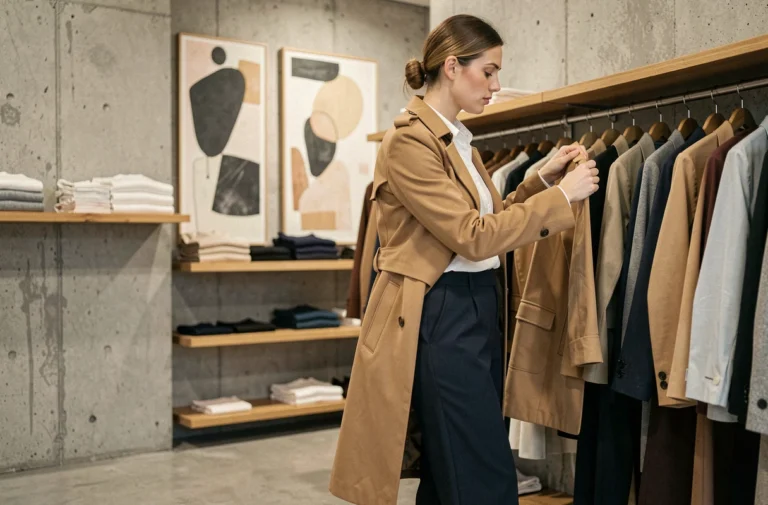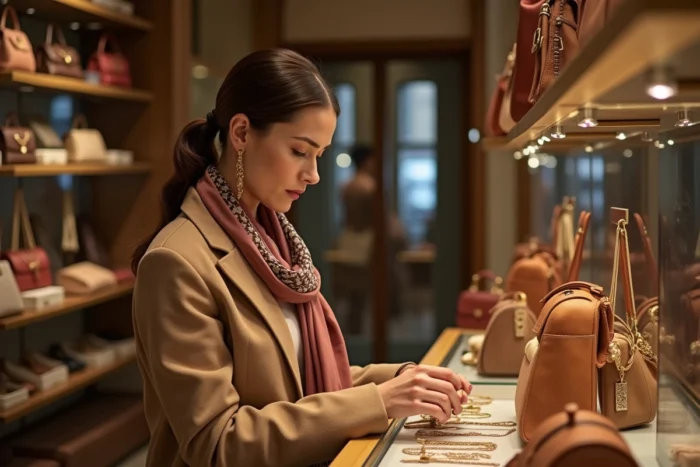
Fashion accessories do not all work the same way depending on the silhouette, color palette, or clothing context. Choosing a piece that enhances a style requires understanding the relationships of proportion, material, and finish, far beyond simply following seasonal trends.
Proportion Ratio: How an Accessory Changes the Perception of a Silhouette
An ill-sized accessory disrupts the visual balance of an outfit. We systematically observe this phenomenon with bags: a compact clutch on an oversized silhouette creates a scale mismatch that diminishes the bust, while a tote bag worn by a petite person flattens the line.
The accessory/silhouette ratio takes precedence over the trend itself. A choker works on a bare neckline because it occupies an empty space without competing with the collar. Add a bow tie collar, and the same necklace becomes unreadable.
For belts, the principle translates: a wide belt structures a high waist on fluid pants but weighs down a slim jean that is already fitted. Designers offering intricately designed belts this season envision them for defined waists on loose pieces. Breaking out of this pattern requires a mastery of contrast that mainstream articles never address.
Browsing the accessory selection at 2moiselles Happy Lookeuses, one finds this sizing logic adapted to various body types, allowing for a quick filtering of pieces that align with one’s own line.
Materials and Finishes: Leather, Steel, Acetate Facing Durability Requirements
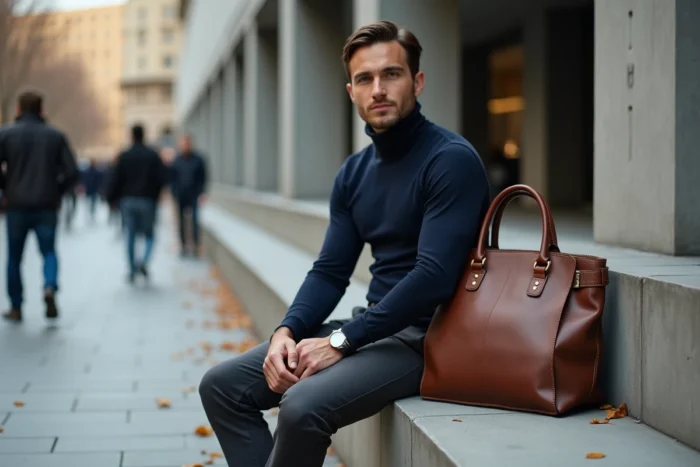
The European regulatory pressure, particularly the extension of Extended Producer Responsibility to the textile-clothing sector, is redefining the accessory offering. Brands must now document the lifespan, reparability, and traceability of their products. We recommend checking these elements before any purchase.
A full-grain vegetable-tanned leather accessory ages better than a coated leather glued to textile. The difference is not always visible in-store, but it becomes glaring after a few months of use. For bags and belts, the leather grain, the thickness of the edge, and the quality of the stitching remain the three reliable indicators.
On the sunglasses side, the thick acetate trend (sculpted frames, saturated colors) comes with a technical criterion often overlooked: the UV filtration category. A fashion frame without proper filter is not an accessory; it’s a risk. Polarized lenses with appropriate protection do not necessarily cost more than their purely aesthetic counterparts.
Stainless Steel Jewelry and Architectural Rings
Stainless steel has established itself as an alternative to gold-plated jewelry for everyday wear. A necklace or ring made of 316L steel resists oxidation, water, and friction without tarnishing. This is not a compromise: it’s a relevant technical choice for pieces worn continuously.
Asymmetrical earrings and rings with architectural volume are making a statement this season. Their visual impact relies on the contrast with the rest of the outfit. A bold ring works better on a bare hand than on fingers loaded with several thin rings.
Investment Accessories vs. Seasonal Accessories: The Real Calculation
Studies on purchasing behavior show a clear polarization towards pieces that are kept for a long time, with a rejection of ephemeral gadgets. This trend, particularly pronounced among younger buyers, transforms the usual reading grid.
A thick cotton bucket hat or a well-constructed cap can last through several seasons without losing its shape. In contrast, a low-end polyester model deforms after a few washes. The purchase price does not always reflect the real cost per use.
- A genuine leather bag worn for three seasons costs less per use than a synthetic clutch replaced every year
- A pair of glasses with optical quality lenses protects the eyes and lasts, whereas a gimmicky frame ends up in a drawer
- A belt with a removable buckle allows for style changes without having to buy the whole piece, reducing accumulation

This reasoning in cost per use also applies to jewelry. A brushed finish steel necklace worn daily for years represents a negligible investment compared to a series of costume pieces that tarnish in a few weeks.
Color Palette and Accessory-Outfit Coordination This Season
The dominant colors of the season guide the choice of accessories, but not in the way that style guides usually suggest. Coordinating an accessory does not mean matching it exactly to your outfit. A controlled contrast (a cognac bag with a navy outfit, golden earrings with a khaki ensemble) creates more depth than a total monochromatic look.
Natural tones (ecru, sand, terracotta) dominate leather accessory collections. They function as warm neutrals, compatible with most clothing palettes. For sunglasses and jewelry, satin finishes prevail over shiny finishes, reflecting a general movement towards understated elegance.
The Case of Statement Accessories
Statement pieces (bold patterned bag, XXL necklace, logo belt) are not obsolete, but their use is becoming more precise. One strong piece per outfit is sufficient. Stacking eye-catching accessories is an advanced styling exercise that, if poorly executed, produces the opposite effect of what is intended.
The most reliable rule remains that of a single focal point: identify the area of the silhouette you wish to highlight, place the most elaborate accessory there, and keep the rest understated. A successful look can be read in a second, without the need for interpretation.