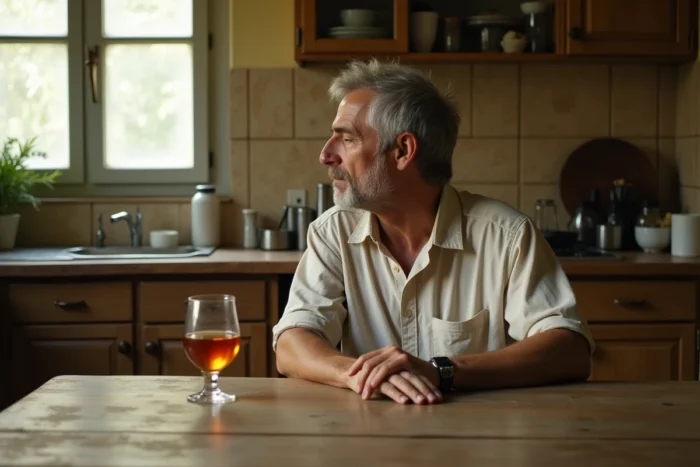
A glass of Ricard on a summer terrace, diluted with fresh water, remains one of the most ingrained rituals in French culture. However, pastis contains 45 degrees of alcohol, the same as whisky or vodka. This concentration of ethanol is accompanied by an ingredient rarely mentioned in bar discussions: glycyrrhizin, extracted from licorice. This dual profile, strong alcohol and active plant compound, deserves a detailed look at its real effects on three target organs.
Glycyrrhizin and hypertension: the risk not detailed on the label
Have you ever noticed the sweet and round taste of pastis, even before adding sugar? This flavor comes largely from licorice, and more specifically from the glycyrrhizin it contains.
This compound acts on a kidney enzyme that regulates cortisol. When consumed regularly, even in moderate amounts, the body retains more sodium and loses potassium. The concrete result: glycyrrhizin can cause hypertension, edema, and in severe cases, heart rhythm disorders.
ANSES has identified licorice among the substances present in dietary supplements and beverages that pose a risk to blood pressure. The problem is not limited to Ricard: all products containing glycyrrhizin (candies, herbal teas, pastis from other brands) are affected. An article detailing the dangers of Ricard on health revisits this accumulation of factors specific to pastis.
For someone already being treated for hypertension, the combination of strong alcohol and licorice acts as a double tension lever. Ethanol alone already raises blood pressure, while glycyrrhizin enhances it through a distinct mechanism. The two effects accumulate without compensating for each other.
Alcohol at 45 degrees and the liver: dose-dependent toxicity without a protective threshold
The liver transforms ethanol into acetaldehyde, a toxic and carcinogenic substance, before converting it into acetate. This process works properly as long as the amount of alcohol remains occasional and low.
With a spirit measuring 45 degrees, the dose of ethanol per glass is significantly more concentrated than with wine or beer. A standard glass of pastis (2.5 cl of Ricard in water) represents about one unit of alcohol, or 10 grams of pure alcohol. Two or three glasses on a summer afternoon may seem harmless. However, they correspond to two or three units, which is the daily limit beyond which the risk of liver damage increases significantly.
When consumption is repeated, the liver goes through well-documented stages:
- Fatty liver: the liver stores fats that it can no longer eliminate. This stage is reversible if consumption stops.
- Alcoholic hepatitis: inflammation that causes fatigue, abdominal pain, and sometimes jaundice. The liver is already damaged.
- Cirrhosis: destroyed liver cells are replaced by scar tissue (fibrosis). This stage is irreversible and can progress to liver cancer.
The transition from one stage to another depends on the amount of alcohol consumed over time, not the type of drink. Ricard is neither more nor less toxic than another alcohol with an equivalent degree for the liver. What changes is the ease with which one can keep drinking when the beverage is diluted in a large glass of cold water.
Effects of alcohol on the brain: no threshold without risk
Data from Santé publique France reminds us of a point often minimized: the risk to the brain starts with the first glass. Not the third, not the fifth.
Ethanol crosses the blood-brain barrier within minutes. It disrupts transmission between neurons, slows reflexes, and alters short-term memory. These acute effects are known. What is less known is the impact of regular, even moderate, consumption.
In the long term, alcohol causes a measurable reduction in brain volume. The areas primarily affected are the prefrontal cortex (decision-making, impulse control) and the hippocampus (memory). Recovery is possible if consumption stops, but it is partial and slow.
Pastis, like any spirit at 45 degrees, delivers this dose of ethanol in a concentrated form. Adding water does not reduce the amount of alcohol absorbed; it simply dilutes the sensation in the mouth. Diluting is not reducing the dose; it is a classic perceptual trap with aniseed drinks.

Ricard and 41,000 annual deaths: placing pastis in the overall picture
Santé publique France attributes 41,000 deaths per year in France to alcohol, across all beverages. This figure includes cancers, cardiovascular diseases, liver damage, and accidents.
Ricard is one of the most sold spirits in France. Its cultural place in the South and its friendly image do not change its chemical composition. A glass of pastis contains the same amount of ethanol as a glass of whisky or cognac.
The peculiarity of pastis lies in three cumulative factors:
- A high alcohol content (45 degrees), which concentrates ethanol by volume
- The presence of glycyrrhizin, which adds its own cardiovascular risk, independent of alcohol
- A mode of consumption (diluted, on a terrace, in hot weather) that promotes dehydration and the chaining of glasses
The French guidelines for lower-risk consumption make no exceptions for pastis. The prevention message is unified: the risk exists from the first glass, regardless of the beverage.
The licorice present in Ricard transforms an ordinary spirit into a drink with a dual risk mechanism. Knowing this peculiarity allows for informed choices, not a renunciation of all conviviality.