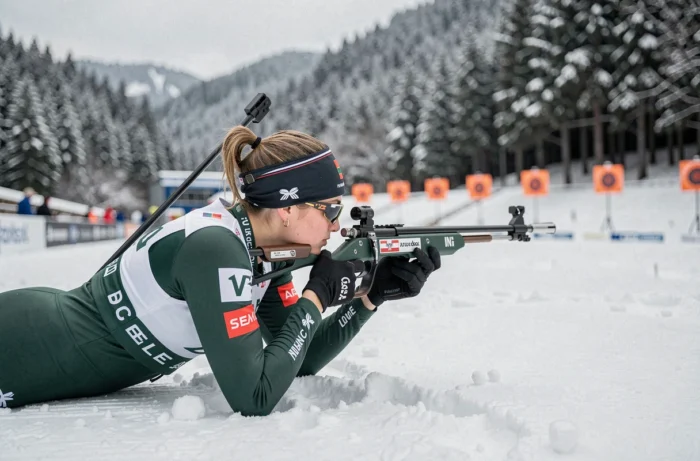
The women’s biathlon ranking is based on a points system awarded for each World Cup race. Each individual result feeds into an overall ranking and discipline-specific rankings, updated after each stage of the circuit. Understanding this mechanism allows for reading the sports hierarchy beyond just the podium.
Points Scale in the Biathlon World Cup: What Each Place Earns
The scale used by the IBU (International Biathlon Union) awards points to athletes based on their finishing position. The victory earns 90 points, and second place earns 75 points. Starting from third place, the scale has been revised upwards for the 2024-2025 season: third place now awards 65 points, up from 60 previously.
This revaluation affects the seven places following second place. The rest of the scale decreases gradually, and only athletes finishing within a certain rank receive points. This system rewards consistency as much as a one-time achievement.
The details of the women’s biathlon ranking and points allocation allow for a concrete visualization of the distribution by place throughout the season. A consistent podium presence weighs more heavily than an isolated victory followed by average results.
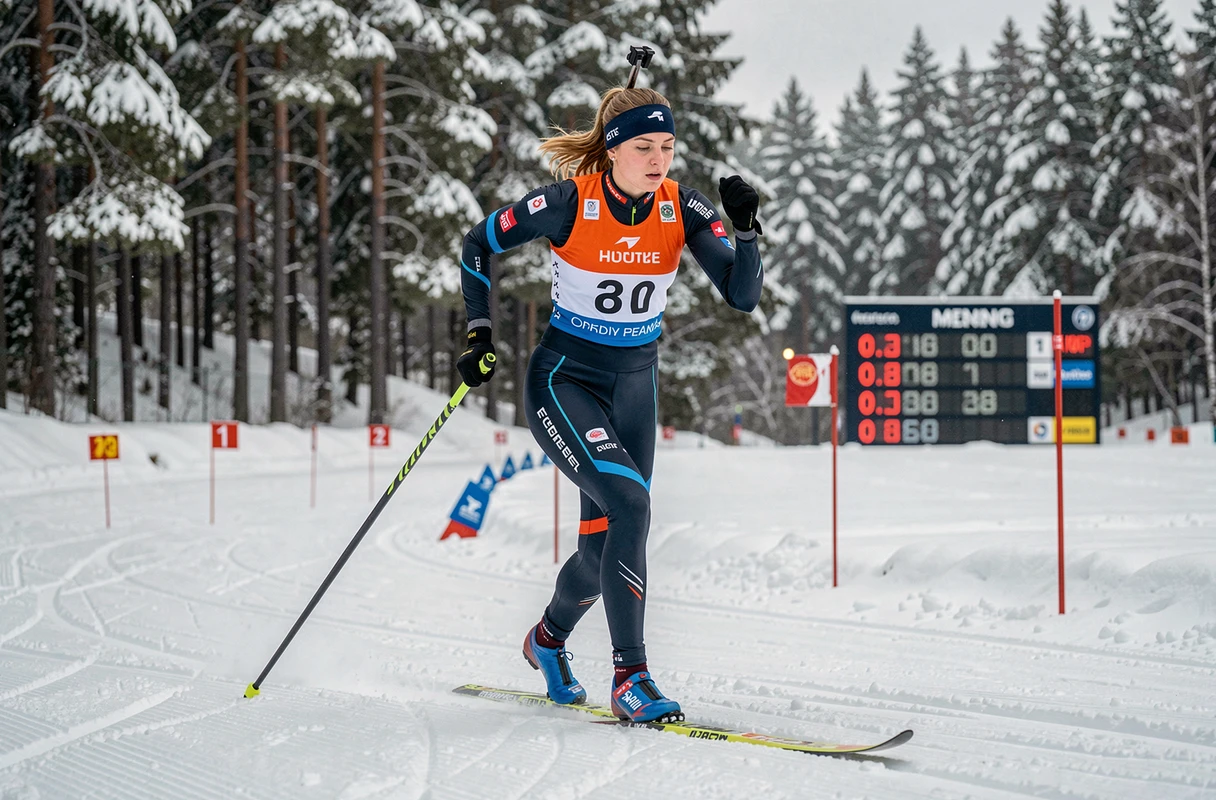
Overall Women’s Ranking and Discipline Rankings: Two Distinct Readings
The IBU publishes a women’s overall ranking that sums up the points earned across all individual events of the season. This ranking determines the circuit leader and, at the end of the season, the holder of the large crystal globe.
In parallel, there are discipline-specific rankings: sprint, pursuit, individual, mass start. Each of these sub-rankings only counts the results of the relevant event. A biathlete can dominate the sprint ranking without being in the top 10 of the individual, as the required qualities differ.
Why Distinguish These Rankings
The overall ranking values versatility. An athlete who regularly finishes in the top 15 across all disciplines accumulates more points than a brilliant specialist in just one format but absent from others.
The discipline rankings also help identify favorites for the World Championships and the Olympic Games, where each format is run separately. The cross-reading of the two types of rankings reveals the true profile of a biathlete.
Women’s Biathlon Events: Format and Impact on Points
The women’s World Cup circuit includes several event formats. Each has its own rules, but the points scale remains the same regardless of the type of individual race.
- The sprint is run over a short distance with two shooting rounds (prone then standing). Each missed target results in a penalty lap added to the race time.
- The pursuit starts from the sprint ranking: the first one takes off in the lead, with the others starting with a gap corresponding to their delay. Four shots punctuate the course, with a penalty lap for each mistake.
- The individual is the longest event. Each missed shot adds a minute of penalty to the final time, without an additional lap to ski.
- The mass start gathers the best in the overall ranking. Group start, four shots, penalty lap for each missed target. The first to cross the finish line wins.
The relays (team or mixed) earn points for the nations’ ranking, not for the individual women’s ranking. This distinction often causes confusion.
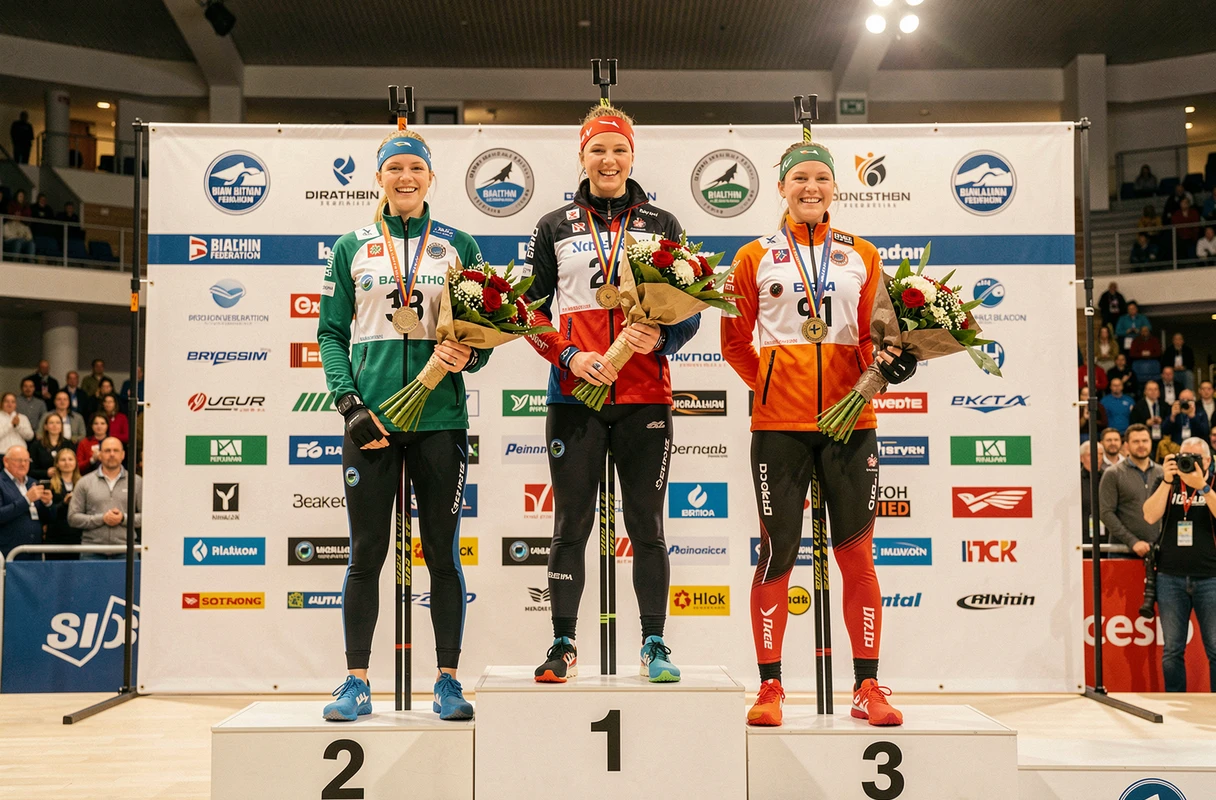
Shooting and Cross-Country Skiing: The Balance That Shapes the Women’s Biathlon Ranking
The final ranking of a biathlon race always depends on the total time at the finish. No separate points are awarded for shooting performance or skiing speed. Everything merges into a single time.
In the sprint, a penalty lap costs about twenty to thirty seconds depending on the course layout. In the individual, the minute of penalty per missed target weighs even more heavily. A biathlete who is fast on skis but inaccurate in shooting loses more places than the reverse.
Heart Rate Management at the Shooting Range
The specific difficulty of biathlon lies in the combination of intense skiing and precision shooting. After a high heart rate effort, the athlete must stabilize their breathing within seconds to aim at small targets. The target in prone shooting is smaller than that in standing shooting, which explains the differences in success rates between the two positions.
Biathletes who master this transition gain time at the shooting range and avoid penalty laps. This factor distinguishes contenders for the overall ranking from mere fast skiers.
Start Groups and National Quotas: Access to Points in Competition
A new start group system has been implemented by the IBU. This mechanism determines the order in which athletes start during sprints and individuals. The highest-ranked athletes start in the first group, giving them more favorable track conditions.
The ranking thus directly influences the racing conditions, creating a virtuous circle for the leaders. Each nation also has quotas that limit the number of biathletes who can participate in World Cup events. These quotas depend on the collective results of the previous season.
For nations with a small number of athletes, every point counts doubly: it feeds into the athlete’s individual ranking and contributes to the national quota for the following season. A collective underperformance can reduce the number of spots available for an entire country.
The total prize money for the 2024-2025 season amounts to 9,366,700 euros, with a notable increase for individual World Cup and World Championship races. Points and financial prizes follow the same hierarchy, reinforcing the stakes of each race for the female biathletes on the circuit.