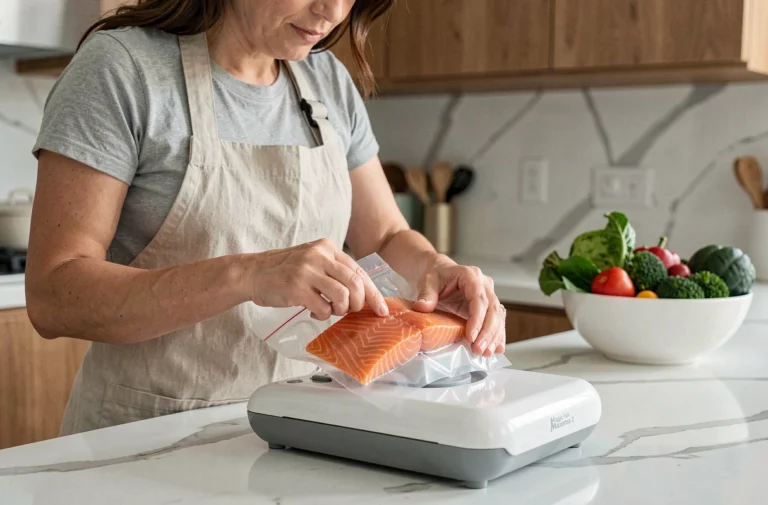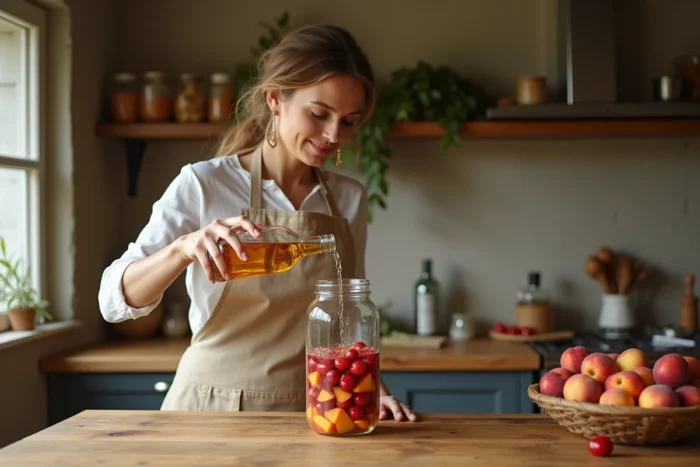
Preserving fruits in alcohol is based on a simple principle: ethanol, beyond a certain degree, prevents the development of microorganisms responsible for fermentation and mold. The alcoholic strength of the final solution, the type of alcohol used, and the sugar content determine the shelf life and the taste quality of the result. At Leclerc, the selection on the shelf has significantly evolved in recent years, changing the game for homemade preparations.
Minimum alcoholic strength for reliable fruit preservation
The central factor in preserving in alcohol is the alcoholic strength of the final solution, meaning that of the mixture once the fruits are added. The fruits release juice, which dilutes the initial alcohol. An alcohol at 40° poured over juicy cherries or mirabelles can drop below 25° in the jar, a threshold where some yeasts remain active.
To achieve stable preservation for several months, the solution in the jar must remain above about 20°. In practice, this means that the initial alcohol must be significantly higher than this threshold. An alcohol at 40° is sufficient for less watery fruits (walnuts, dried prunes). For fleshy and juicy fruits (peaches, apricots, raspberries), a more concentrated initial alcohol, around 45° to 70°, should be aimed for, depending on the quantity of fruit in the jar.
The question of which alcohol for fruits at Leclerc to choose therefore directly depends on the type of fruit and its water content.
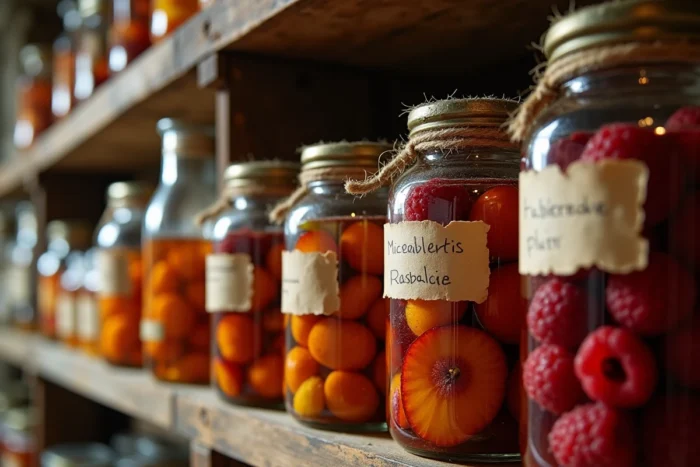
90° alcohol for fruits at Leclerc: why it has become rare
Traditionally, homemade fruit preserves were prepared with neutral alcohol at 90°. This product allowed for absorbing the dilution caused by the fruit juice without dropping below the critical threshold. The problem is that it has become much harder to find in large retail.
The retail sale of high-proof ethyl alcohol for consumption is now more regulated in France. Fiscal and health reforms regarding ethyl alcohol, confirmed by texts published by the DGFiP and the DGDDI between 2022 and 2024, have led to a scarcity of these products on the shelves.
A direct consequence in Leclerc stores: 90° alcohol for fruits is either absent from the shelf or replaced by alternatives ranging between 40° and 70°. This reality requires adapting the preservation method.
Which alcohols are available at Leclerc for macerating and preserving fruits
Three categories of products remain accessible in the spirits aisle and allow for the preservation of homemade fruits.
- 40° alcohol for fruits: often labeled “fruit alcohol” or “neutral brandy,” this is the most common product. It works well for less juicy fruits or preparations where added sugar enhances preservation (like rumtopf).
- Vodka between 37.5° and 50°: an economical and neutral-tasting alternative. It does not alter the flavor of the fruits. “Overproof” vodkas (above 40°) offer a better safety margin against dilution.
- White or amber rum between 40° and 55°: adds a marked aromatic note. Agricultural rums at 50° or 55° are a good compromise between flavor and sufficient strength to preserve fleshy fruits like pineapples or bananas.
The choice between these options depends on two criteria: the desired strength after dilution and the desired taste profile. A neutral alcohol allows the fruit to express itself. Rum or fruit brandy (mirabelle, pear) adds an aromatic layer that directs the preparation towards an aperitif or digestif use.
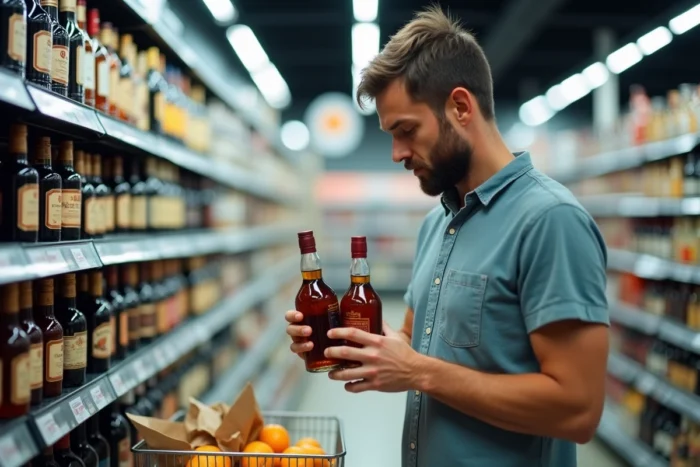
Reading the label: what the INCO regulation requires checking
The European regulation EU 1169/2011, known as the INCO regulation, imposes precise labeling on spirits sold in supermarkets. This information is useful for choosing a quality maceration alcohol.
Three elements deserve attention on the label:
- The exact nature of the alcohol: “agricultural origin ethyl alcohol” is preferable for food maceration. Some low-cost products use industrial origin alcohols whose organoleptic profile is less refined.
- The mention of additives or added flavors: an alcohol intended for preservation should be as neutral as possible. “Flavored spirits” contain additions that may interfere with maceration.
- The volumetric alcohol content (TAV): this is the actual degree, which must be displayed. Comparing the TAV between two bottles is the most useful action at the time of purchase.
Compensating for a lower degree: sugar, proportions, and duration
With 40° alcohol instead of 90°, preservation remains possible as long as the method is adjusted. Sugar plays a complementary role: by increasing the osmotic pressure of the liquid, it helps to slow down microbial development. A generous proportion of sugar (about one-third of the weight of the fruits) partially compensates for a modest alcoholic degree.
The proportion of fruits relative to the alcohol also matters. Never fill the jar with fruits beyond two-thirds: the alcohol must largely cover the fruits to avoid areas exposed to air, where mold can form.
With 40° alcohol, the maceration duration before consumption is extended (several weeks at a minimum), but the total preservation duration is shorter than with 90° alcohol. Expect a few months under good conditions (airtight jar, protected from light and heat) rather than a year or more.
Sterilizing the jar before filling remains a step not to be overlooked, regardless of the degree of alcohol used. A poorly cleaned jar can introduce contaminants that even strong alcohol will not neutralize immediately.
Ultimately, the choice of alcohol at Leclerc comes down to a trade-off between degree, taste, and budget. A 50° white rum offers the best compromise for most summer fruits, while a standard 40° vodka is suitable for sweet preparations to be consumed in the following months.